The OTvest™ Is a Research-Backed, Holistic Intervention for ADHD
The OTvest™ is a research-backed, non-medication intervention designed to help increase attention and focus for individuals with ADHD through deep pressure therapy.
By providing calming, organizing proprioceptive input, the OTvest™ helps wearers feel more regulated, centered, and ready to engage. And when we feel better, we do better™—something wearers often say immediately after putting it on:
“It feels good!”

Unlike bulky or obviously therapeutic products, the OTvest™ is stylish and discreet, making it ideal for use in classrooms, community settings, and everyday life.
Deep Pressure Therapy for ADHD
Deep pressure therapy is a naturally calming form of sensory input. Think of the instinctive act of gently but firmly pressing on someone’s shoulders when they are overwhelmed—it feels good and helps the nervous system settle.
The OTvest™ replicates this effect through distributed, neurologically informed weight placement across the upper back and chest. This calming pressure can be worn throughout the day—independently, discreetly, and without assistance—making it a practical and effective tool for daily regulation and attention support.
Proven to Increase Attention — Backed by Published Research
The OTvest™ design is grounded in peer-reviewed research published in the American Journal of Occupational Therapy¹ .
In this school-based study conducted by occupational therapist Nancy VandenBerg¹, children diagnosed with attention difficulties demonstrated:
- 18–25% increased attention to task in the classroom when wearing a weighted vest with weights lying on the body
- With 95% statistical probability that the improvement was due to the vest
This original research¹ later led to the development and patenting of the OTvest™ as a more effective sensory, deep pressure touch, and ergonomic design.
How the OTvest™ Supports Attention — With Science
Just as runners experience a “runner’s high” from increased dopamine, deep pressure therapy influences brain chemistry in a calming, focusing way.
Research shows that deep pressure touch stimulation may support the release of key neurotransmitters, including:
- Serotonin (calming and mood regulation)
- Norepinephrine & epinephrine (focus and alertness)
Children with ADHD have been found to have lower levels of serotonin, which may contribute to hyperactivity and difficulty regulating attention as supported by published research (Gainetdinov et al., 1999; Taylor, 1994). The OTvest™ applies sustained deep pressure in a neurologically intentional way that may help support nervous system regulation—naturally and without medication.
This makes the OTvest™ an ideal classroom intervention, as well as a supportive tool for:
- Homework and learning
- Community outings
- Church or social events
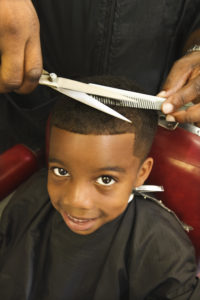
- Sensory-challenging situations (such as haircuts).
- Adults at work or school
Research-Based OTvest™ Design
Nancy VandenBerg, OTR/L, has practiced occupational therapy since 1975. After observing the growing number of children placed on attention medication, she conducted a school-based study to explore alternative interventions.
The results—published in the American Journal of Occupational Therapy¹—showed significant improvements in attention when children wore a weighted vest with the weights calibrated for their body weight and the weights positioned high and directly on the child's body (not hanging in hems or pockets).
Ms. VandenBerg recognized limitations in the few existing weighted vest designs and went on to engineer a more effective solution: the OTvest™.
What Makes the OTvest™ Different
Unlike traditional weighted vests or blankets that rely on loose pellets or sand, the OTvest™ uses:
- Dense, flat steel plates
- Positioned directly on the body's muscle receptors
- Quilted into a one-piece, calibrated weight insert
This design allows the OTvest™ to deliver deep, sustained pressure using less total weight, based on the physics principle that pressing down is more effective than pulling down.
Because the weight lies directly on the body and are positioned high up on the body:
- Pressure remains effective even when sitting as weights don't just rest on the chair
- Weight does not shift, bunch up
- Fewer pounds are needed for therapeutic benefit than in garments with weights less effectively positioned in hems or in pockets
Features & Benefits
- Provides calming deep pressure therapy that may support serotonin production
- Requires less weight than traditional weighted or compression vests
- Uses dense steel plates, not beads, sand, or pellets
- No loose weights to fall out, lose, or be handled/played with
- Weight rests across the upper back and chest, not on the lap when seated
- One-piece quilted insert—no bulky packets or slippery beads/pellets that fall out
- Stylish, discreet design suitable for daily wear
- Built for long-term durability
- Supports focus, regulation, and attention—naturally



Trusted Since 2002
Since 2002, the OTvest™ has been used by:
- Schools, occupational therapists, physical therapists
- Psychiatric facilities and autism centers
- Specialized treatment programs, rebabilitation facilities
- Parents and adults worldwide
All seeking a holistic, research-backed way to help individuals with ADHD feel calmer, more regulated, and more attentive.
and deep pressure touch, sensory designed solution.
The difference is the weight placement — only the OTvest’s patented insert applies effective therapeutic deep pressure where it matters.
Place an order by clicking here 
References:
Blackman,W. (2009). Bobath Concept: Theory and Clinical Practice in Neurological Rehabilitation' written by the British Bobath Tutors Association (BBTA) and edited by Raine, Meadows, and Lynch-Ellerington
Gainetdinov, R. R., Wetsel, W. C., Jones, S. R., Levin, E. D., Jaber, M., & Caron, M. G. (1999, January 15). Role of serotonin in the paradoxical calming effect of psycho-stimulants on hyperactivity. Science, 283, 397–401.
Taylor, J. F. (1994). Helping your hyperactive/attention deficit child. Rocklin, CA: Prima Publishing.
Temple Grandin, Ph.D (1992), Calming effects of deep touch pressure in patients with autistic disorder, college students, and animals, Journal of Child and Adolescent Psychopharmacology. Vol. 2,1.
¹VandenBerg, N., (2001). The use of weighted vests to increase on-task behavior in children with attention difficulties, American Journal of Occupational Therapy, Vol. 55, 621-628. doi:10.5014/ajot.55.6.621
This research is also in the book, Pediatric Issues in Occupational Therapy: A Compendium of Leading Scholarship (Royeen, 2004) published by AOTA (N. VandenBerg, Chapter 25.)
Royeen, C. (2004). Pediatric Issues in Occupational Therapy, AOTA