The OTvests helps improve balance and reduce tremors
The OTvest ™ Weighted Vest can Help Improve Balance Problems in Ataxia, Parkinson's, Multiple Sclerosis, Cerebral Palsy, Dyspraxia--and Help Reduce Tremors
The OTvest™ offers a natural way to help treat balance problems and difficulties by utilizing effective weight placement in the weighted vest. It’s a simple, non-invasive intervention that can do so much!
Balance, Coordination & Body Awareness Support: The OTvest™ Weighted Vest for Balance Difficulties & Ataxia, Dyspraxia and Tremor Reduction
The OTvest™ weighted vest provides deep pressure touch therapy designed to support balance, coordination, and body awareness through strategically placed weights. This simple, non-invasive sensory intervention offers a practical way to help individuals feel more grounded and stable during movement.
The OTvest™ denim weighted vest may be especially beneficial for individuals experiencing balance challenges, movement- related instability, ataxia, and dyspraxia. Dyspraxia is difficulty with motor planning and body awareness--which is knowing where your trunk and limbs are positioned when seated or performing activities without having to look at your arm, etc.
Wearers often report reduced dizziness, an increased sense of feeling more "grounded", improved sleep, and greater confidence with balance, gait, and motor control. More information on improved sleep can be found at otvest.com/sleep
The OTvest™ helps promote an increased sense of independence and provides a feeling no other weighted garment can give!
How Deep Pressure Supports Balance & Coordination
The deep pressure provided by the OTvest™ delivers proprioceptive input to muscles and joints, sending important information to the brain about body position and movement. This sensory feedback helps the nervous system better understand where the body is in space—without relying on visual input alone.
This internal awareness of movement and position is known as kinesthetic awareness, and it plays a critical role in coordination, posture, and balance. When deep pressure is applied directly to the muscles' sensory receptors—as with the OTvest™—this feedback may be enhanced, helping support improved motor control and coordination.
Trunk Stability & Postural Support
The OTvest™ features carefully positioned, evenly distributed weight front and back, that provides gentle joint compression and sensory input to encourage co-contraction of muscles. This can support postural stability and trunk control, similar to the grounding effect of firm, steady hands placed on the upper back and chest to reduce sway and imbalance.
The OTvest™ uses the effective physics of pushing down directly on the muscles of the body, rather than pulling down as in garments where weights are attached to the garment in pockets or hems. This weight placement design requires less weight than other weighted garments, as well as the use of dense steel weights (rather than bulky pellets, sand, plastic beads, etc).
By stabilizing the trunk, the OTvest™ helps support:
- Improved balance and postural control
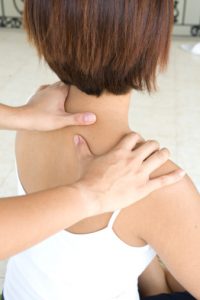
The OTvest applies deep pressure across the upper back and upper chest (shoulder-girdle). - Increased awareness of body positioning
- Greater confidence during movement
- Decreased anxiety through the calming effect of deep pressure
- Decreases dizziness
- Tremor reduction
The OTvest™, with strategically positioned weights, helps compress the joints, and adds sensory stimuli for co-contraction. This allows the OTvest™ to be beneficial for postural stability, increasing not only the wearer’s awareness of where their body is positioned, but ALSO stabilizing the trunk--like someone placing their hands upon one's upper chest and upper back to help decrease sway and imbalance. The deep pressure also has a calming effect that reduces the anxiety often seen in persons with movement disorders, and improves sleep.
⭐ Real Results from Real OTvest™ Wearers
Before Wearing the OTvest™
Many individuals experiencing balance challenges, ataxia, or reduced body awareness describe:
-
Feeling unsteady or dizzy during walking or standing
-
Lateral sway or difficulty maintaining posture
-
Anxiety related to movement or fear of falling
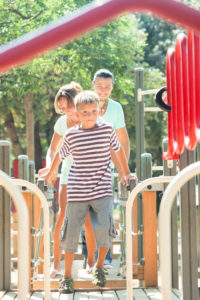
The OTvest can help improve balance and coordination. -
Needing support from walls, furniture, or caregivers
-
Fatigue from constantly trying to stay balanced
- Tremors in arms and hands
After Wearing the OTvest™
After incorporating the OTvest™ weighted vest, wearers often report:
-
Feeling more grounded and stable
-
Improved balance, gait, and motor control
-
Reduced dizziness during movement
-
Increased confidence when walking or standing
-
Greater comfort moving independently
-
A calming sense of body awareness and postural support
- Reduction of tremors
- Reduced anxiety and improved sleep
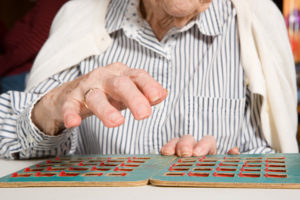
The deep pressure provided by the OTvest can help improve motor control.
💬 Wearer Testimonial
“I received the vest and it is a game changer for me! It is already enabling me to walk much better. I only have to wear it for about an hour, and even after I take it off, I am walking better. I’m going to recommend it to my ataxia group and write about it for Ataxia Australia. The weight is perfect. Thank you so much.”
— Vicki Pedler, Queensland, Australia
The occupational therapist who created the OTvest was trained in Detroit, MI by the world-renown Bobaths--the English physiotherapist and neurologist team who created Neuro Developmental Treatment (see reference 8 below), as well as her years of experience treating persons with movement disorders.

👉 Try the OTvest™ and feel more grounded, stable, and confident during movement. CLICK HERE to order
Robin, an OTvest™ wearer with cerebellar ataxia, began wearing the weighted vest in the hopes that it would reduce her lateral sway (see references 1,3,4 and 7 below). The OTvest™ provided such an effective treatment for her cerebellar ataxia that Robin no longer needs to hold onto a wall or depend on support from her physical therapist when she wears the OTvest™.
Robin’s before and after experience wearing the weighted vest is recorded and demonstrated in the video below. She is wearing the size Medium OTvest™ that comes stock with 4 lb. weight insert.
NOTE: In this video, Robin is wearing an OTvest™ size medium with the 4 lb. weight insert stock in that size.
Place an order by clicking here.
Look for the yellow "OTvest™" label on the chest pocket to make sure you are getting the genuine OTvest™. Others may look like the OTvest™ from the outside, but the weight placement is important. Only the OTvest™ has the patented weighted insert with weight lying directly upon the body. This makes the difference!
Note: The OTvest™ is not recommended for those with spinal cord problems and the accompanying balance problems associated with those disorders, such as herniated or dislocated discs, degenerative disc disease, or other spinal cord injuries. The balance problems that benefit from the OTvest™, weighted vest are those with upper motor neuron and/or cerebellar problems described in the first paragraph.
References:
- Lucy SD, Hayes KC. Postural sway profiles: normal subjects and subjects with cerebellar ataxia. Physiother Can 1985;37: 140-8.
2. Chase RA, Cullen JK, Sullivan SA. Modification of intention tremor in man, Nature 1965;4983:485-7.
3. Clopton N, Schultz D, Boren C, Porter J, Brillhart T. Effects of axial loading on gait for subjects with cerebellar ataxia: preliminary findings. Neurol Report 2003;27:15-21.
4. Gillen, G. (2000). Improving activities of daily living performance in an adult with ataxia. American Journal of Occupational Therapy, (54)1:89-94.
5. Hewer RL, Cooper R, Morgan MH. An investigation into the value of treating intention tremor by weighting the affected limb.,Brain 1972;95:570-90.
6. Morgan MH, Hewer RL, Cooper R. Application of an objective method of assessing intention tremor–a further study on the use of weights to reduce intention tremor. J Neurol Neurosurg Psychiatry 1975;38:259-64.
7. Morgan MH. Ataxia and weights, Physiotherapy 1975;61: 332-4.
8. Smedal T, Lydren H, Myhr KM, et al. Balance and gait improved in patients with MS after physiotherapy based on the Bobath concept. Physiother Res Int 2006;11:104-16.
9. Widener GL, Allen DD, Gibson-Horn C. Balance-based torso-weighting may enhance balance in persons with multiple sclerosis: preliminary evidence. Arch Phys Med Rehabil 2009;90:602-9.