

How the OTvest™ Weighted Vest Benefits Mental Health Settings
Sensory-based interventions—particularly those incorporating weighted items that provide deep pressure therapy—have been shown to reduce the need for seclusion and full restraint episodes for up to 12 months following implementation, while also supporting improved arousal and energy levels (Bobier et al., 2015). Sensory modulation programs, including the use of sensory rooms, have demonstrated effectiveness in helping children and adolescents in psychiatric settings manage stress and agitation and in supporting efforts to reduce restrictive interventions.
The OTvest™ weighted deep pressure vest can serve as a simple, effective component of a sensory modulation program—both within inpatient mental health environments and in community-based settings.
A Flexible Sensory Strategy—Anywhere, Anytime
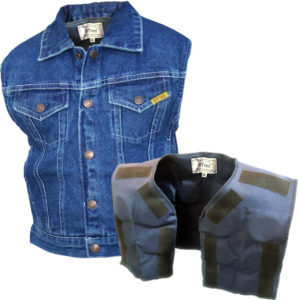
The OTvest™ delivers deep pressure therapy through evenly distributed weight across the upper back and shoulders. Unlike interventions that require access to a dedicated sensory room, the OTvest™ is an easily applied strategy that can be worn independently and incorporated seamlessly into daily routines.
Some individuals may avoid sensory rooms due to the one-on-one staffing required or personal preference. In these situations, the OTvest™ offers a gentle, non-intrusive alternative that can be used in a variety of environments, including:

-
The dining room
-
Therapy sessions
-
Free or leisure time
-
Prior to bedtime to support sleep regulation
-
Community settings during reintegration
Minimal Training, Maximum Impact
Unlike many sensory programs that require extensive staff training and ongoing education, the OTvest™ requires minimal instruction to implement effectively. Staff training challenges—such as scheduling conflicts, turnover, or missed training sessions—have been identified as barriers to the success of some sensory interventions. The OTvest™ helps reduce these barriers while remaining highly effective as a standalone intervention or when combined with other sensory strategies.
Designed for Dignity and Community Integration
The OTvest™ is intentionally designed to be stylish and non-stigmatizing, making it appropriate for individuals of all ages and genders. Its appearance supports dignity and encourages use beyond the acute setting, promoting continuity of care and successful community integration.
Hygienic, Durable, and Cost-Effective
Unlike weighted blankets or compression vests, the OTvest™ is well suited for multiple wearers in clinical environments. The nylon Cordura exterior can be easily wiped down between uses, and the vest alone can be fully laundered as needed—making it far easier to disinfect thoroughly than many other weighted or compression-based products.
Constructed with high-quality materials, the OTvest™ is extremely durable and designed to withstand years of daily use, making it a sound and economical choice for departmental budgets.
Precision Weight Placement for Therapeutic Benefit
While many weighted vests rely on sand or pellet-filled pockets or hems that do not consistently contour to the body, the OTvest™ features a patented weight insert of strategically placed thin steel disks, evenly distributed both front and back. These disks are designed to lie directly upon the sensory receptors of the muscles, delivering targeted deep pressure therapy and proprioceptive input exactly where it is most effective. The pressure on the sensory receptors encourage production of calming neurotransmitters.
This precise weight placement may help individuals:
-
Experience increased calm and improved focus on meaningful daily activities
-
Decrease anxiety, stress, agitation, aggression, and urges toward self-harm
-
Manage symptoms associated with PTSD, TBI, Alzheimer’s disease, and other neurocognitive disorders
-
Support regulation for individuals with Autism, Sensory Processing Disorder, ADHD, Tourette’s syndrome, and OCD
-
Promote sensory modulation, mindfulness, and stress reduction during recovery and community reintegration
-
Reduce reliance on seclusion and restraint interventions
- Promotes self-awareness through proprioceptive input and trunk stability
-
Support appropriate arousal levels while improving sleep quality
- Increase attention and focus during therapy sessions


→Click here to ORDER THE OTvest to experience the difference that only the OTvest can provide. The weight placement makes the difference.
References:
Ashby, M., Lindsay, W., Pitcaithly, D., Broxholme, S., & Geelen, N. (1995). Snoezelen: Its effects on concentration and responsiveness in people with profound multiple handicaps. British Journal of Occupational Therapy, 58, 303-307.
Ayres, A.J. (1979). Sensory integration and the child. Los Angeles: Western Psychological Services.
Bailliard, A. L., & Whigham, S. C. (2017). Linking neuroscience, function, and intervention: A scoping review of sensory processing and mental illness. American Journal of Occupational Therapy, 71, 7105100040. https://doi.org/10.5014/ajot.2017.024497
Bobier, C., Boon, T., Downward, M., Loomes, B., Mountford, H., Swadi, H. (2015). Pilot investigation of the use and usefulness of a sensory modulation room in a child and adolescent psychiatric inpatient unit, Occupational Therapy in Mental Health, 31,4, 385-401.
Brown, C. (2001). What is the best environment for me? A sensory processing perspective, Occupational Therapy in Mental Health, 17 (3/4), 115-125.
Champagne, T. (2011). The therapeutic use of weight, Sensory Modulation & Environment: Essential Elements of Occupation. Pearson.
Champagne, T., Stromberg, N.,(2004). Sensory Approaches in Inpatient Psychiatric Settings: Innovative Alternatives to Seclusion & Restraint. Journal of Psychosocial Nursing, 42, no. 9.
Krauss, KE, (1987). The effects of deep pressure on anxiety, American Journal of Occupational Therapy, 41: 366-373.
Machingura, T., Lloyd, C., (2017). A reflection on success factors in implementing sensory modulation in an acute mental health setting. International Journal of Therapy and Rehabilitation 24(1): 35-39
¹ McNett, M., Sarver, W., & Wilczewski, P. (2012). The prevalence, treatment and outcomes of agitation among patients with brain injury admitted to acute care units. Brain Injury, 26, 1155-1162.
Mullen, B., Champagne, T., Krishnamurty, S., Dickson, D., Gao, R., (2008). Exploring the Safety and Therapeutic Effects of Deep Pressure Stimulation Using a Weighted Blanket, Occupational Therapy in Mental Health, 24, 65-69.
Novak T, Scanlan J, McCaul D, (2012). Pilot study of a sensory room in an acute inpatient psychiatric unit, Australian Psychiatry, 20: 401–406.
Sutton, D., Wilson, M., Van Kessel, K., Vanderpyl, J., (2013). Optimizing arousal to manage aggression: A pilot study of sensory modulation, International Journal of Mental Health Nursing, 22, 500–511.
Warner, E., Koomar, J., Lary, B., & Cook, A., (2013). Can the body change the score? Application of sensory modulation principles in the treatment of traumatized adolescents in residential settings. Journal of Family Violence, 2(7), 729–738. doi:10.1007=s10896-013-9535-8
Copyright 2017 OTvest, LLC