Tourette’s Syndrome: Tic Reduction and treatment with the OTvest sensory weighted vest
OTvest™ Sensory Deep Pressure Vest for Tourette’s Syndrome
Feel Better. Focus Better. Do Better.
The OTvest™ Sensory Deep Pressure Vest is an easily applied, non-invasive intervention designed to improve attention, increase focus, and reduce anxiety and tics in individuals with Tourette syndrome.
Developed by a pediatric occupational therapist with over 25 years of public school experience, the OTvest™ was created to support students who struggle with attention-to-task, fine motor control, and tic frequency in classroom settings.
The Tourette Association of America suggests the use of weighted vests for individuals with sensory processing challenges and Tourette’s Syndrome to help promote calm and focus in school environments.¹
Clinically Informed. School-Tested. Trusted for Over 24 Years.
The occupational therapist who designed the OTvest™ worked extensively with children diagnosed with Tourette’s in public schools. Students demonstrated:
The deep pressure applied DIRECTLY to the wearer by the OTvest can help reduce tics.
Increased attention-to-task
Improved fine motor control (including handwriting)
Greater completion of classroom assignments
Reduced observable tic frequency
Improved classroom participation
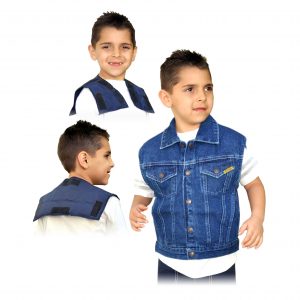
Her clinical work was published in the American Journal of Occupational Therapy³ and led to the patented design of the OTvest™, featuring strategic weight placement across the upper body to deliver effective, therapeutic deep pressure.
For more than two decades, OTvest™ has supported individuals with Tourette’s Syndrome across the United States — from elementary-aged students to middle school, high school, and adults.
Observable Classroom Improvements
When wearing the OTvest™:
Students who previously were unable to even engage in coloring activities were able to stay seated and color within the lines.
Fine motor control improved, including handwriting legibility.
Assignment completion increased.
Students voluntarily requested to wear the vest, often saying, “It feels good.”
Older students also benefit. Middle and high school students report improved focus during longer academic tasks, reduced anxiety, and fewer stress-related tic increases.
When students feel better, they perform better. The WEIGHT PLACEMENT in the OTvest makes the difference!
Targeted Deep Pressure for Tic Reduction
Why Deep Pressure Helps
Tics frequently increase in stressful or overstimulating situations. The OTvest™ provides calibrated deep pressure directly to the upper body through effectively positioned weights.
Each size is professionally calibrated to ensure the appropriate amount of therapeutic input.
Deep pressure:
Activates sensory receptors in muscles and joints
Patented concealed weight insert with weight evenly distributed front and back attaches inside the OTvest.
Stimulates calming pathways in the nervous system
Helps reduce physiological stress responses
Promotes improved regulation and attention
As anxiety decreases, many individuals experience a corresponding reduction in tic frequency.
How Deep Pressure Affects the Brain
Deep pressure influences areas of the brain responsible for regulation and emotional processing. Research indicates that calming sensory input may support the release and regulation of neurotransmitters such as:
Serotonin
Dopamine
Norepinephrine
These brain chemicals are associated with mood regulation, attention, alertness, and overall well-being.
Similar to the calming effects experienced during massage, meditation, or physical exercise, strategic deep pressure input can help:
Reduce anxiety
Promote alert calmness
Improve sleep quality
Support sustained attention
The patented OTvest™ design applies weight in targeted upper-body locations to maximize therapeutic benefit while maintaining comfort and mobility.
A Non-Invasive, Holistic Support Option.
A mother applies deep pressure to calm her son so he is able to focus on handwriting–as does the OTvest.
The OTvest™ is a practical, classroom-friendly sensory tool that:
Requires no medication adjustment
Is easy to put on and remove
Supports existing therapy plans
Can be used during challenging academic activities
Looks like normal, everyday wear
For clinicians, educators, and families seeking supportive interventions for individuals with Tourette’s Syndrome, the OTvest™ offers a structured, research-informed approach grounded in decades of occupational therapy practice.
OTvest™ — Helping Wearers Feel Better, Focus Better, and Do Better.Each size is calibrated with the correct amount of effective weight and deep pressure application.
The OTvest is non-invasive, holistic treatment approach to calm and reduce stress and anxiety in those with Tourette’s Syndrome.
An Educator’s Guide for Developing Plans for Students with Tourette Syndrome¹, which includes using weighted vests for those with sensory processing difficulties. The OTvest can help reduce tics, and those with handwriting difficulties often show improvement when attention is improved through wearing the OTvest.
² Temple Grandin, Ph.D (1992), Calming Effects of Deep Touch Pressure in Patients with Autistic Disorder, Journal of Child and Adolescent Psychopharmacology.
³ VandenBerg, N.L. (2001). The use of a weighted vest to increase on-task behavior in children with attention difficulties. American Journal of Occupational Therapy, 55, 621-628. November/December 2001. This research is also in the book, Pediatric Issues in Occupational Therapy: A Compendium of Leading Scholarship (Royeen, 2004) published by AOTA (N. VandenBerg, Chapter 25.)